Home » News » Ireland’s First Parkinson’s Football Team Takes on The Ray Kennedy Weekend 2026
Ireland’s First Parkinson’s Football Team Takes on the Ray Kennedy Weekend
Sometimes sport gives us more than a result. It gives us a moment that stays with us.
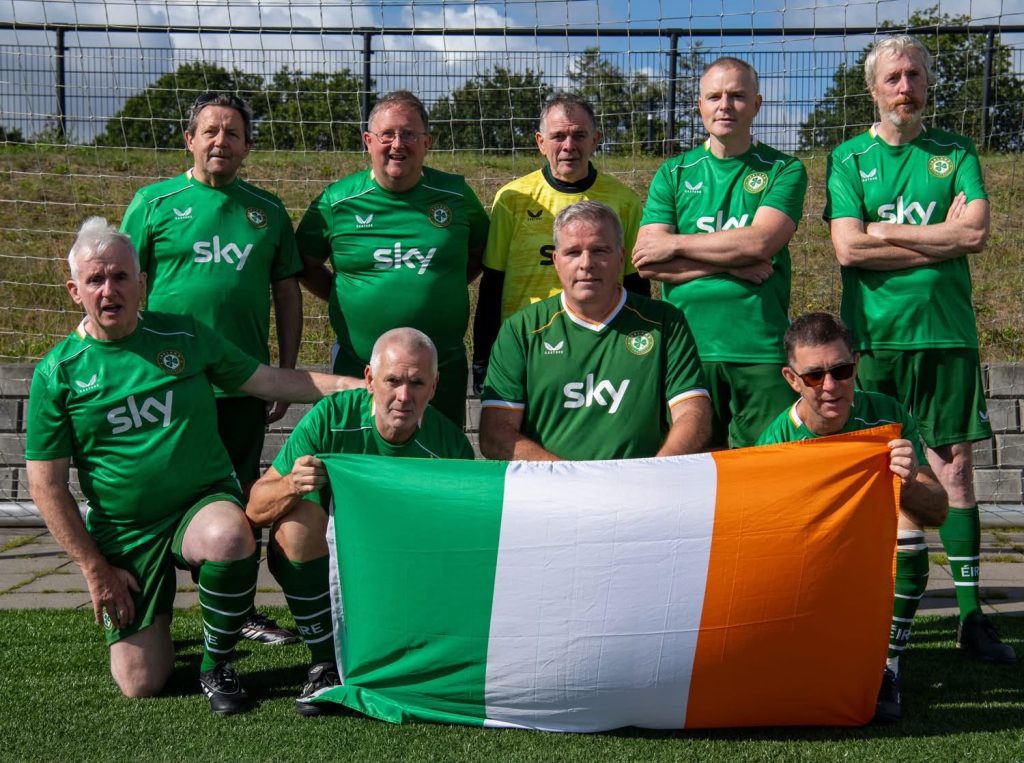
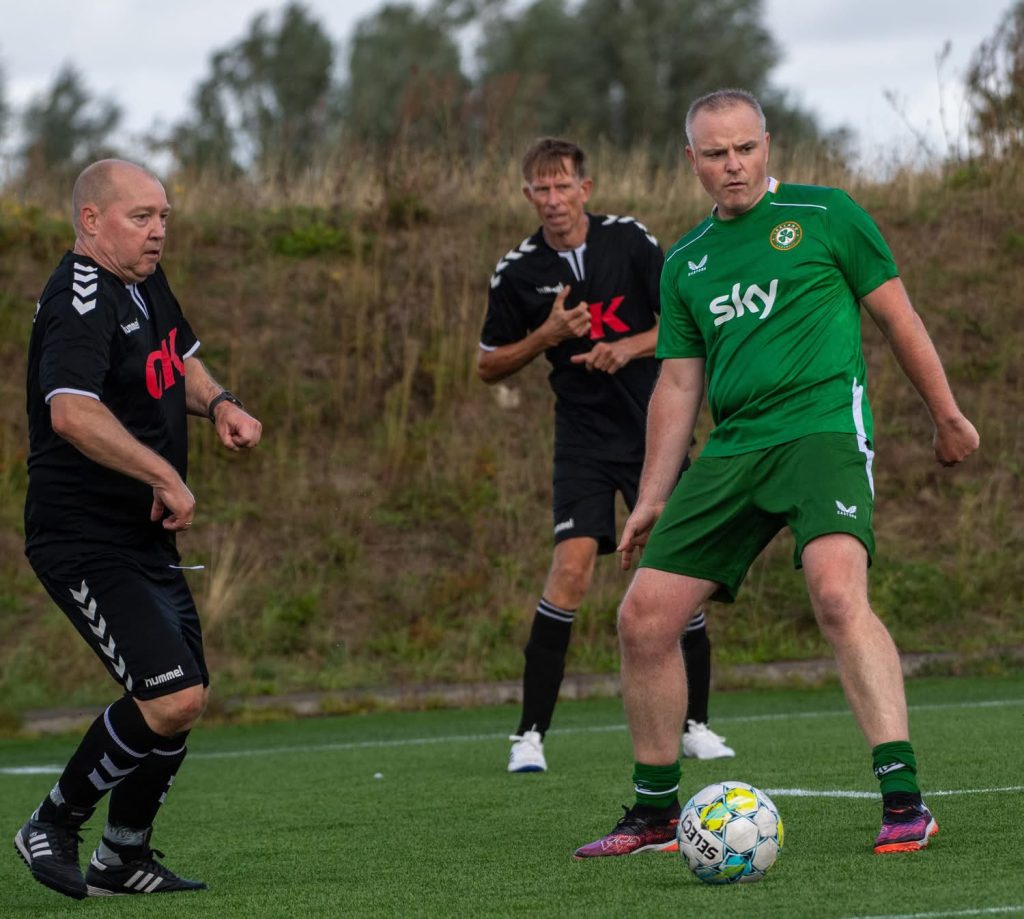
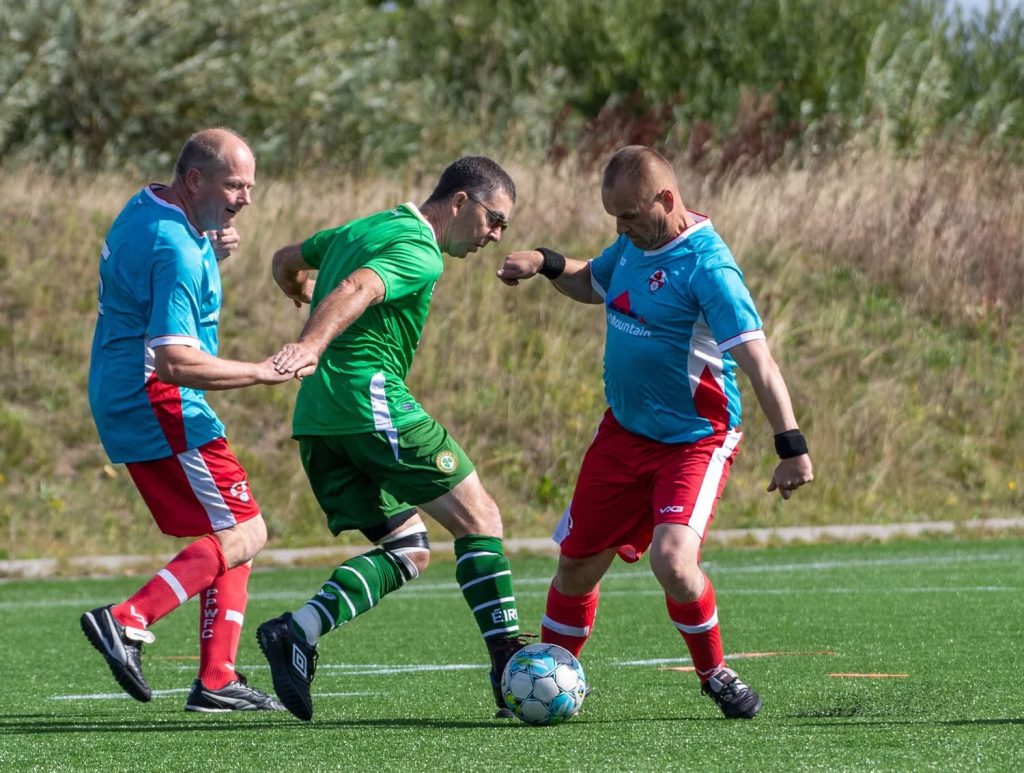
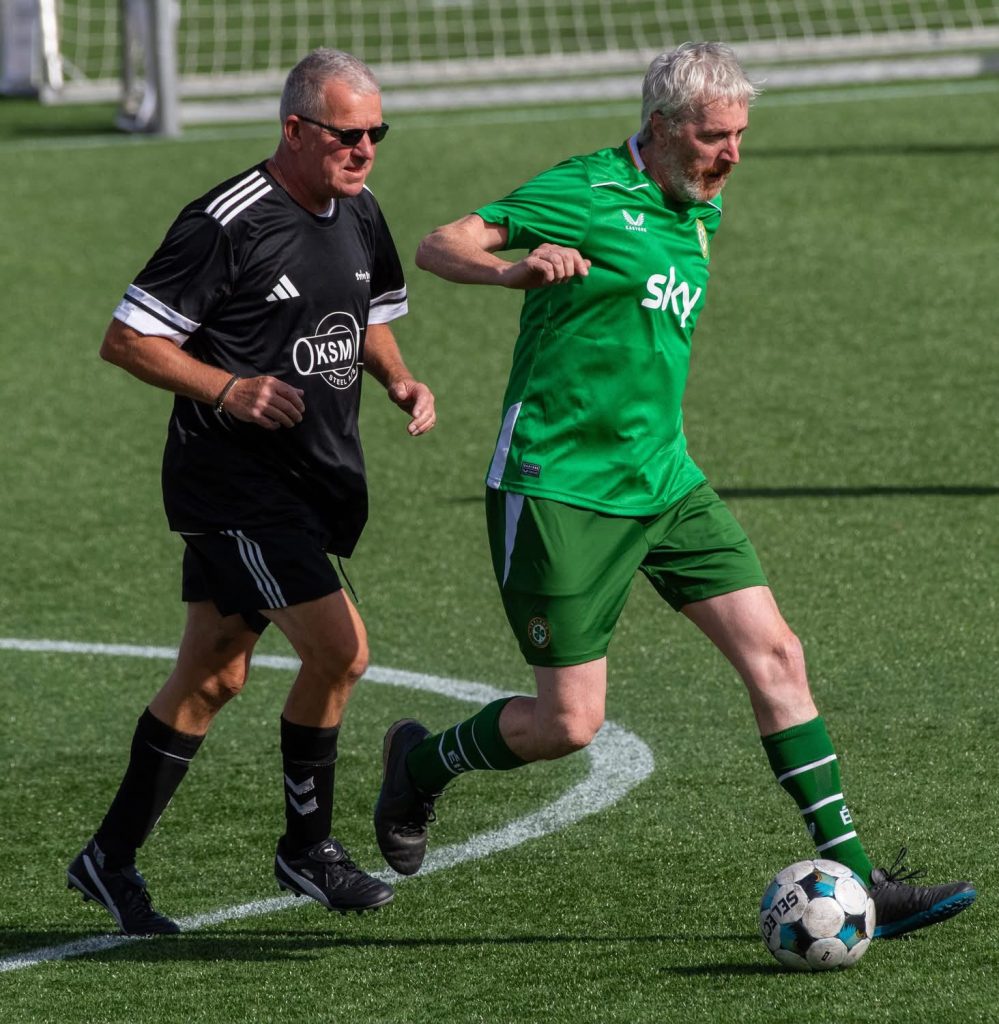
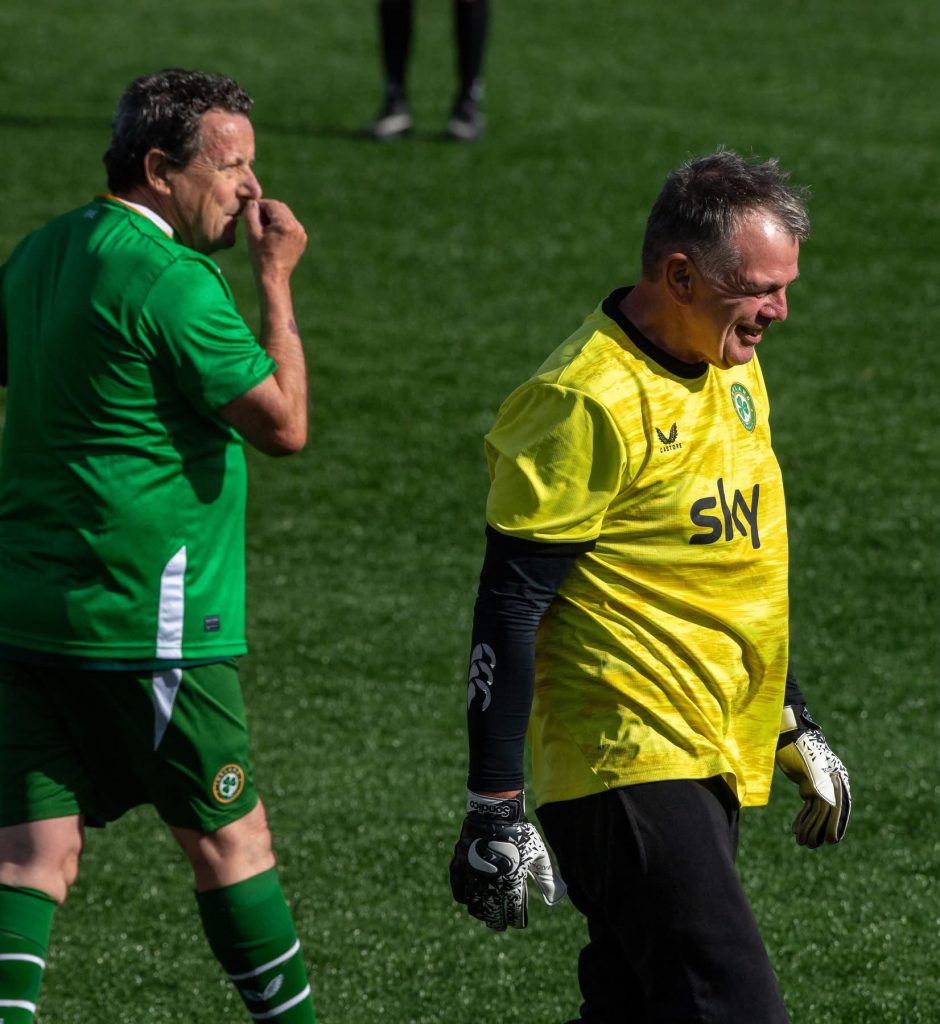
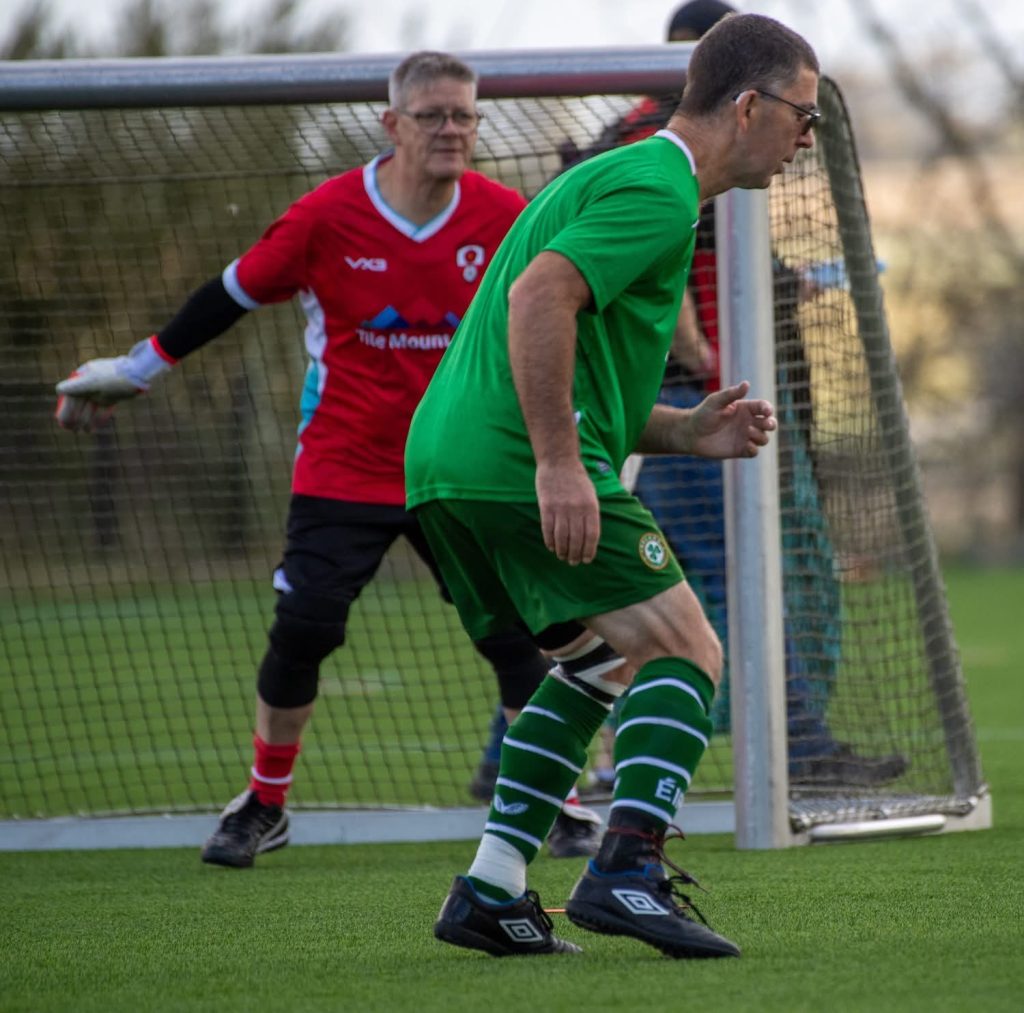
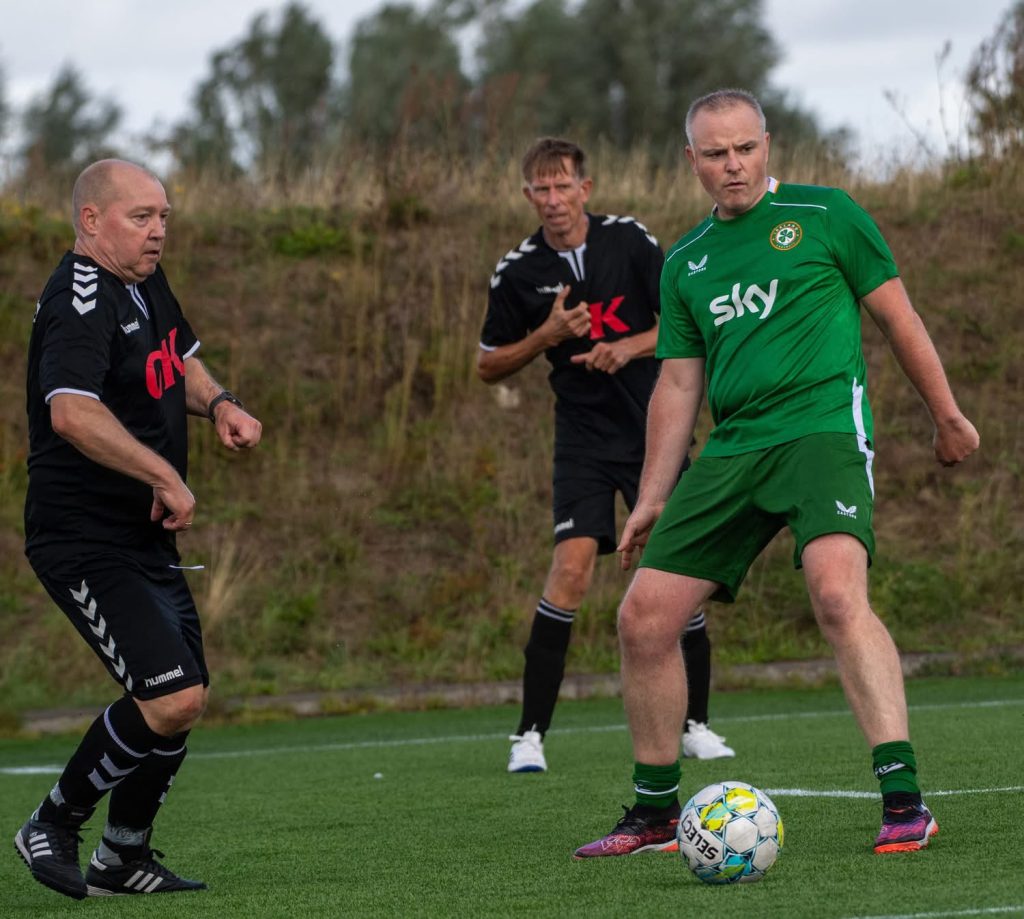
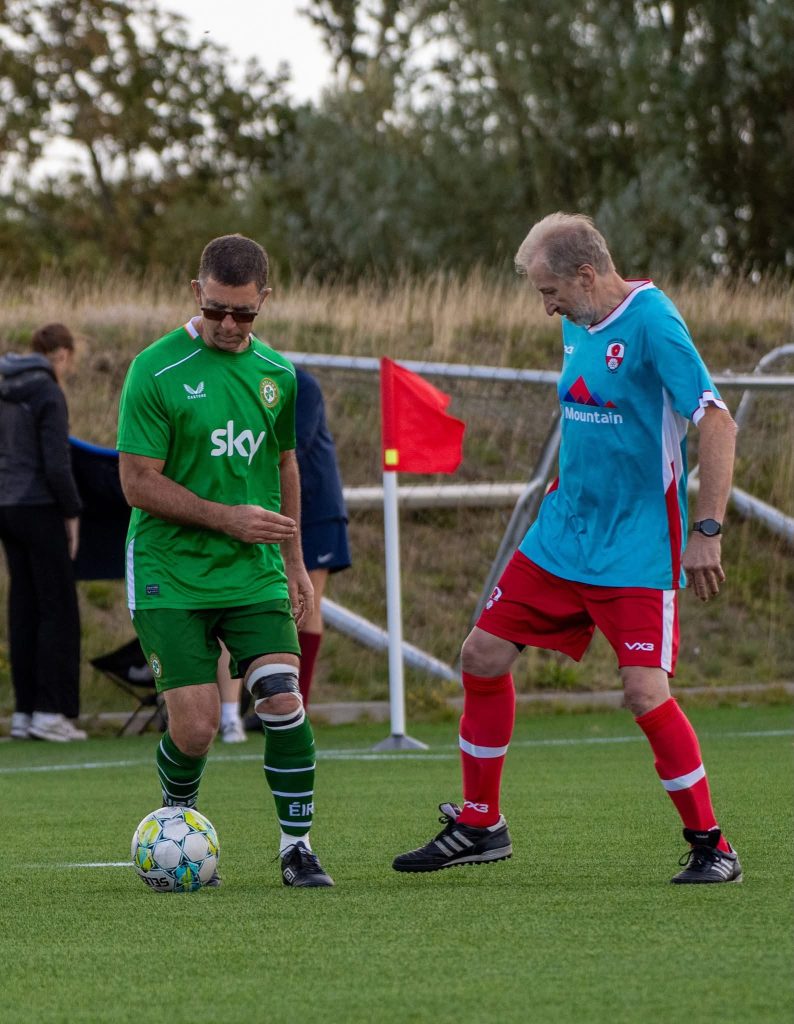
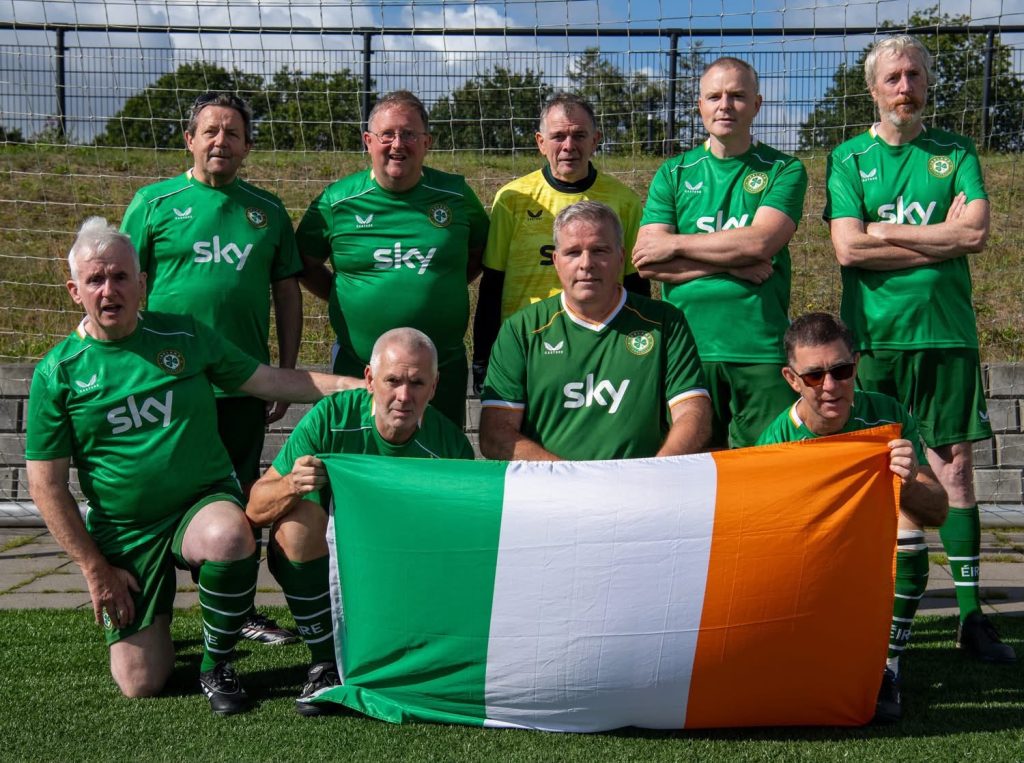
In September 2026, nine remarkable members of EOPD Ireland travelled to Aalborg, Denmark, to do something that had never been done before – represent Ireland as the country’s first Parkinson’s football team at the Ray Kennedy Weekend.
EOPD Ireland was incredibly proud to support the team with a €5,000 bursary, helping make this extraordinary experience possible.
The Ray Kennedy Weekend is about so much more than football. It is about community, connection, friendship, movement and possibility. It brings people living with Parkinson’s together through sport and creates an opportunity to challenge the expectations and limitations that can so often surround a Parkinson’s diagnosis.
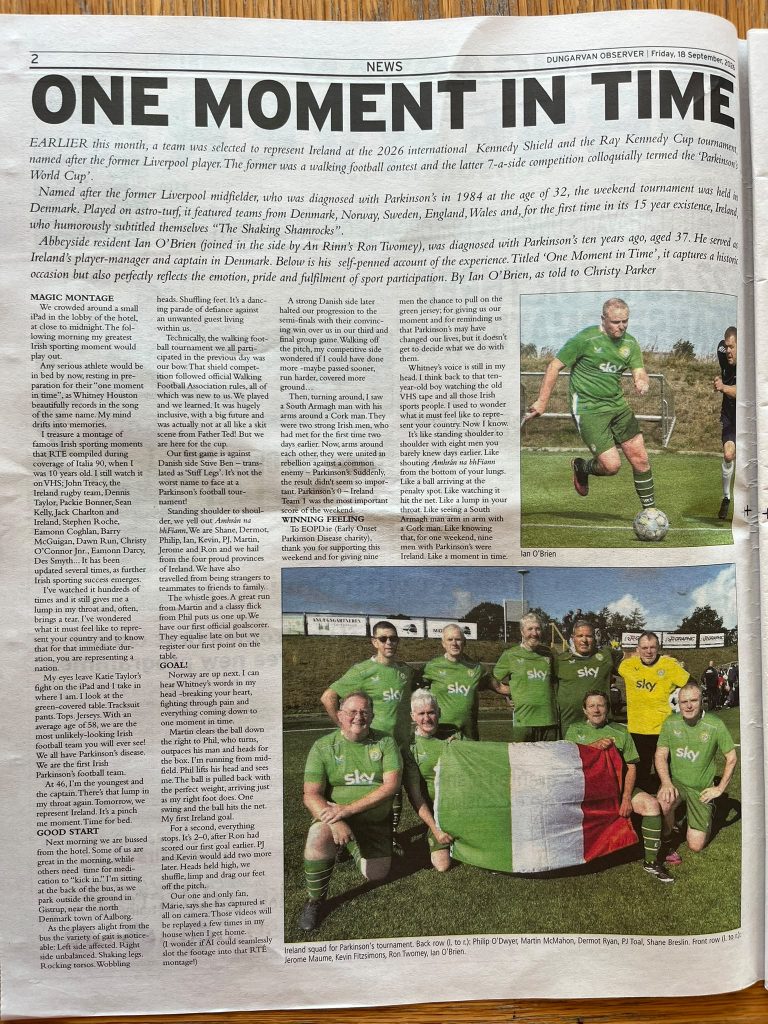
For the Irish team, it was a chance to pull on their green FAI Jersey, stand together, compete, make new friendships and show that Parkinson’s does not get to decide what you can achieve. We are incredibly proud of every member of the team and of the way they represented Ireland. We are also especially proud of Ian O’Brien, whose powerful personal account of the weekend was published in the Dungarvan Observer.
Ian also gave a fantastic interview to WLR, sharing his experience of the weekend and talking about the importance of Parkinson’s football and organisations like EOPD Ireland helping to make opportunities like this possible for the community.
Below, we are delighted to share Ian O’Brien’s full piece, One Moment in Time, as published in the Dungarvan Observer.
We crowded around a small iPad in the lobby of the hotel. It was getting close to midnight local time. My greatest Irish sporting moment would play out the following morning. Any serious athlete would be in bed by now, making sure they were rested and ready toachieve their “one moment in time.” The song title, beautifully sung by Whitney Houston, is probably not the first thing that comes to most people’s minds when they think of Irish sport.
I was ten years old during Italia 90. RTÉ showed a montage of famous Irish sporting moments during some of the coverage. I still have it recorded on VHS. John Treacy. The Ireland rugby team. Dennis Taylor. Packie Bonner. Sean Kelly. Jack Charlton and the Irish soccer team. Stephen Roche. Eamonn Coghlan. Barry McGuigan. Dawn Run. Christy O’Connor Jnr. Eamonn Darcy. Des Smyth.
I’ve watched it hundreds of times down through the years. Every time, it gives me a lump in my throat. I’ve often shed a tear watching it. What must it feel like to represent your country in sport and do your country proud? To pull on the green jersey and know that, for that moment, you are representing everyone back home. A dream. All presented to Whitney’s voice, providing the soundtrack.
That montage has been updated a few times over the years as more recent Irish sporting success has been added. Katie Taylor is now in the tenth and final round of her career at Croke Park. Surely this will make the next update. I pause for a second to take in where I am. I think, surely this is one of those moments that, in years to come, people will ask: “Where were you when…?” My eyes leave the iPad and I look around the Scandinavian-designed table. Green. The green of Ireland. Tracksuit pants. Tops. Jerseys. The most unlikely-looking Irish football team you will ever see. Average age: 58.
I’m 46, the youngest, and captain of this elite squad of nine players. We haven’t been selected through a system, trials or past performances for our clubs. We all failed to prepare. Our brains, that is. Our brains have failed us somewhat. We all have Parkinson’s disease. We are the first Irish Parkinson’s football team. There’s that lump in my throat again.
Katie has won the fight. Croke Park is electric. We look at each other. Tomorrow, we represent Ireland. (Pinch me moment) Time for bed.
Ray Kennedy was a professional footballer who won almost everything there was to win at club level, with spells at Arsenal and Liverpool. His time on Merseyside saw him win the European Cup three times — 1977, 1978 and 1981 — as well as the UEFA Cup in 1976 and the UEFA Super Cup in 1977. He even won Match of the Day’s Goal of the Season award in 1978–79. An incredible footballing career.
But Parkinson’s disease would eventually enter Ray’s life. His struggles with the disease, along with other challenges, saw him live a somewhat isolated life until his death in 2021, aged 70. The Ray Kennedy Weekend is a celebration of football, community and the remarkable strength of people living with Parkinson’s. We are in Aalborg, Denmark, making our Irish debut at a tournament that has been running since 2012.
We are the first Irish team to take part.
We are bussed from the hotel that morning. Some of us are great in the morning. Others need a little time for the medication to “kick in.” I’m sitting at the back of the bus, looking out the window. We park outside the ground in Gistrup. As each player gets off the bus, it is difficult not to notice the variety of gait. Left side affected. Right side unbalanced. Shaking legs. Rocking torsos. Wobbling heads. Shuffling feet. A dancing parade of defiance against an unwanted guest living within us.
Technically, you could argue that the walking football tournament we all participated in the previous day was our bow. This shield competition follows official Walking Football Association rules, none of which any of us were familiar with.
We played. We learned. We learned that Walking Football has a big future. That it is hugely inclusive. And that it isn’t actually a skit scene from an episode of Father Ted. But we are here for the cup. Seven-a-side. Regular astro football. Debut time.
We stand shoulder to shoulder and yell out Amhrán na bhFiann , the national anthem playing from a phone rather than through the tannoy. We push our LSVT Parkinson’s voice training to its optimum. Shane. Dermot. Philip. Ian. Kevin. PJ. Martin. Jerome. Ron. From the four proud provinces of Ireland. From strangers, to teammates, to friends, to family. I suppose Carlsberg is Danish, so weekends here could probably be the best weekends in the world. The whistle goes. A great run from Martin and a classy flick from Phil puts us one up. We have our first official goalscorer. They pull one back late on, but we register our first point on the group table against the Danish side known as “Stil Ben.” Meaning “Stiff legs” in English.
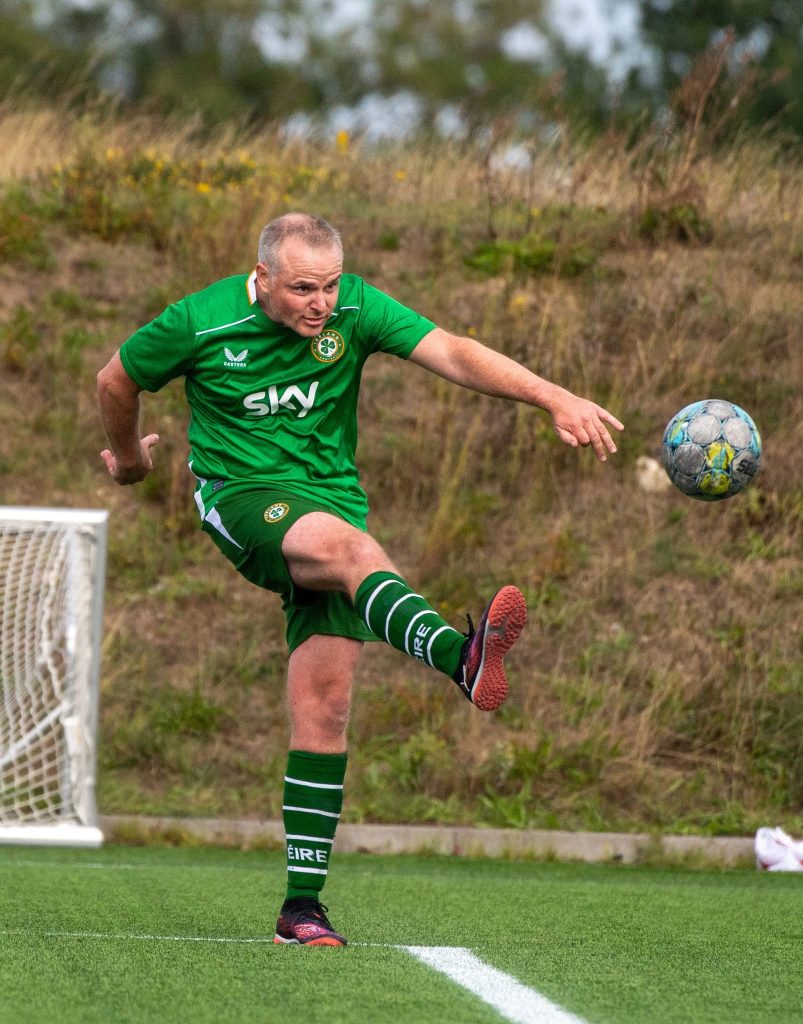
Not exactly the worst name for the opposition at a Parkinson’s football tournament. Norway next. Whitney is still playing in my head. I can hear the words about breaking your heart, fighting through the pain, rising and falling, and having everything come down to one moment in time. Martin clears the ball down the right. Phil receives it. He turns, outpaces his man and heads towards the box. I’m running from midfield. Phil lifts his head. He sees me heading towards the penalty spot.
The ball is pulled back with the perfect weight, arriving just as my right foot does. One swing. The ball is in the net. My first Ireland goal. For a second, everything stops.
I look up. 2–0.
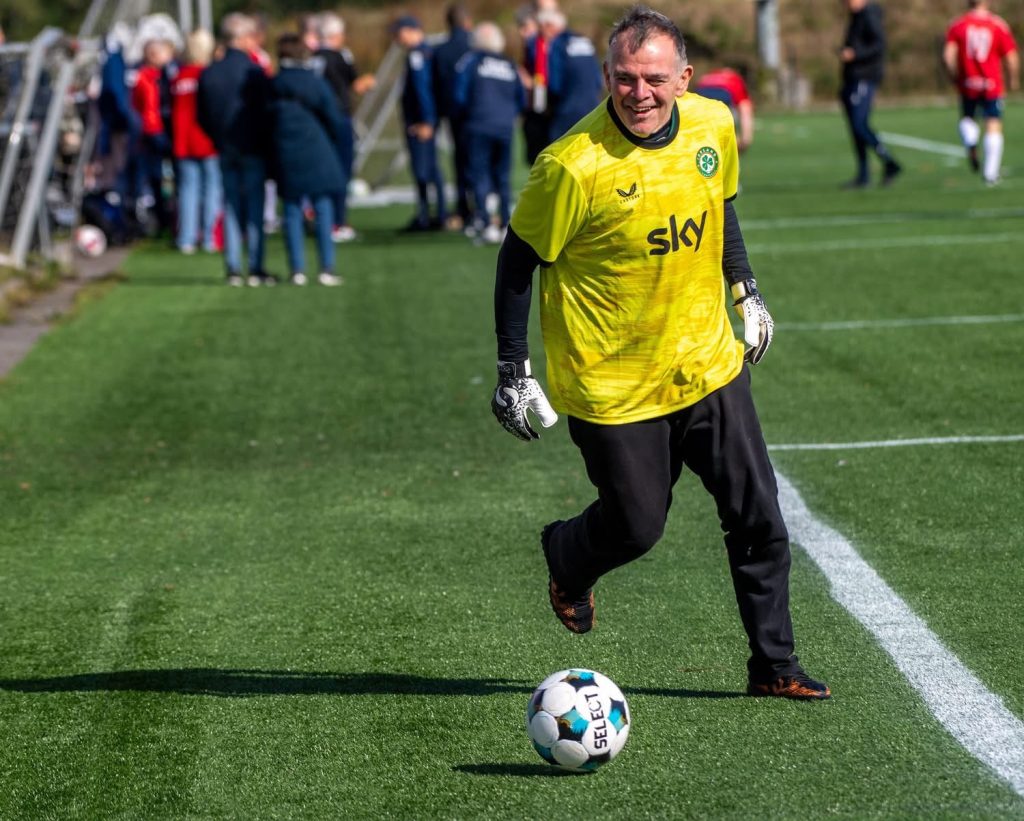
Ron had already scored our first. PJ and Kevin would add to the tally later. We shuffle, limp and drag our feet off the pitch with our heads held high. Our one and only fan, supporter and mammy for the weekend, Marie, tells us she has captured all the action on camera. Those videos will be replayed a few times in my house when I get home. I wonder if AI could seamlessly slot the footage into that old RTÉ montage? Maybe one day.
A strong Danish side would halt our progression to the semi-finals. We needed Sweden to beat those Danish Stiff Legs to keep our hopes alive. Despite our enthusiastic cheerleading from the sidelines, it wasn’t to be. And as we walked off the pitch that day, the competitive side of me wondered if I could have done more.
Should I have passed sooner? Run harder? Covered more ground? Could we have gone further? Then I turned around. Behind me was a South Armagh man with his arms around a Cork man. Two traditionally strong Irish rebel strongholds. Two strong Irish men who had met for the first time just two days earlier. Now standing together, smiling, arms around each other, united in rebellion against a common enemy, Parkinson’s. And suddenly the result didn’t seem quite so important.
Parkinson’s 0 – Ireland Team 1. That is the most important score of the weekend.
The journey home begins. Our Parkinson’s football journey is only beginning. And to EOPD, thank you for making this weekend happen. For giving nine men the chance to pull on the green jersey. For giving us our moment. For reminding us that Parkinson’s may have changed our lives, but it doesn’t get to decide what we do with them. Whitney’s voice is still in my head. The words about seizing that one moment. Making it shine. I think back to that ten-year-old boy watching the old VHS tape. John Treacy. Dennis Taylor. Packie Bonner. Sean Kelly. Stephen Roche. Barry McGuigan. And all the others.
I used to watch them and wonder what it must feel like to represent your country. Now I know. It feels like standing shoulder to shoulder with eight men you barely knew a few days earlier. It feels like shouting Amhrán na bhFiann from the bottom of your lungs. It feels like a ball arriving at the penalty spot. It feels like watching it hit the net. It feels like a lump in your throat. It feels like looking behind you and seeing a South Armagh man arm in arm with a Cork man.
It feels like knowing that, for one weekend, nine men with Parkinson’s didn’t just represent Ireland. We were Ireland. And maybe, just maybe, that’s what a sporting moment is really about. Not the medal. Not the trophy. Not even the score. The moment. Seize it. Make it shine.