
Pre-Budget Submission 2026: Investing in Better Lives for People with Early Onset Parkinson’s
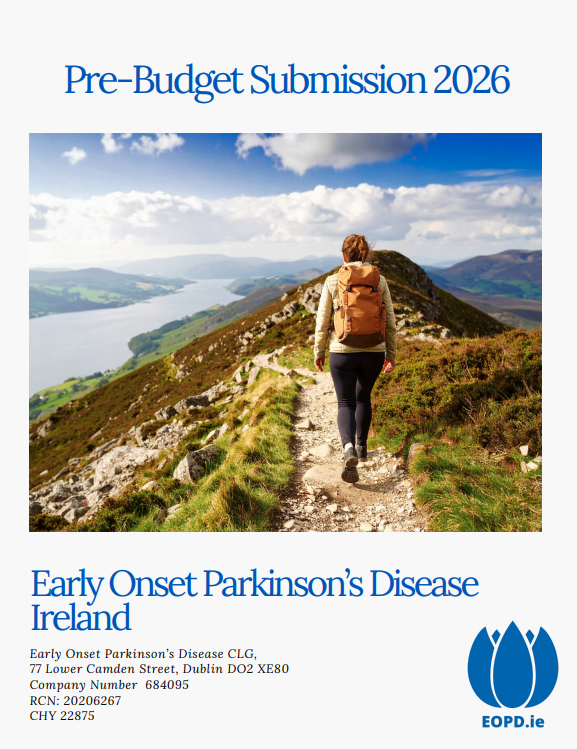
We are calling on the Government to take action in Budget 2026 to improve health outcomes, dignity, and independence for this growing and often overlooked population
EOPD.ie has submitted a comprehensive Pre-Budget Submission which you can read in full here urging the Irish Government to address key gaps in care and support for people living with Early Onset Parkinson’s Disease (EOPD). We encourage you to read the full submission here for a detailed breakdown of the needs, evidence, and rationale behind each of our recommendations — and to understand why investment in these initiatives is both urgent and essential.
As a national charity led by people with Early Onset Parkinson’s (EOPD) and representing people diagnosed with EOPD — typically under the age of 60 — we are calling on the Government to take action in Budget 2026 to improve health outcomes, dignity, and independence for this growing and often overlooked population.
People with EOPD face unique challenges: they are often in the workforce, raising families, and navigating a health and disability system that does not reflect their age, needs, or potential for recovery.
This submission outlines three key recommendations that would significantly improve quality of life and long-term outcomes for people living with EOPD, while also delivering cost savings and systemic improvements for the Irish health service.
1. Fund a Modern Neurosurgical Robot for DBS Surgery
We are calling for a €2.5 million investment in a state-of-the-art neurosurgical robot to expand national capacity for Deep Brain Stimulation (DBS) surgery. This technology would:
- Double the number of DBS procedures performed daily
- Improve patient safety and reduce recovery time
- End the reliance on outsourcing surgeries to the UK — which cost €2 million in 2022–2023 alone
- Keep care within the Irish health system and closer to home for patients and families
- Build long-term capacity and resilience in neurosurgical services
2. Commit Funding Towards Ending the Placement of People Under 65 in Nursing Homes
We are urging the Government to fund a comprehensive national strategy to end the placement of people under 65 — including those with Parkinson’s and complex neurological conditions — in nursing homes. This includes:
- Community-based, age-appropriate supported housing
- A national case management model, as recommended in the Wasted Lives Update (2024)
- Data transparency, clear exit pathways, and access to multidisciplinary care for those awaiting transition
This reform is not only a matter of dignity — it is essential to fulfilling Ireland’s obligations under Article 19 of the UN Convention on the Rights of Persons with Disabilities (UNCRPD).
3. Make Fitness More Accessible Through Tax Rebates
We recommend a targeted tax rebate on gym and fitness memberships for people with neurodegenerative conditions. Scientific research shows that exercise can delay disease progression and improve brain health. This measure would:
- Delay disease progression, reducing long-term dependency on healthcare and disability services
- Delay hospital admissions by supporting mobility and physical resilience
- Delay the need for supported care by promoting independent living
- Delay mental health decline, easing pressure on families and mental health services
- Delay social isolation, supporting inclusion, peer connection, and overall wellbeing
A strategic rebate could yield significant long-term savings and improved health outcomes for both individuals and the wider health system.
Our Call to Government
We urge the Department of Health to reflect these priorities in Budget 2026. With the right investment, Ireland can lead in delivering compassionate, evidence-based care that respects dignity, promotes independence, and strengthens the long-term sustainability of the Irish health system.