
AV Room Policy Briefing April 2026: Early Onset Parkinson’s Disease in Ireland

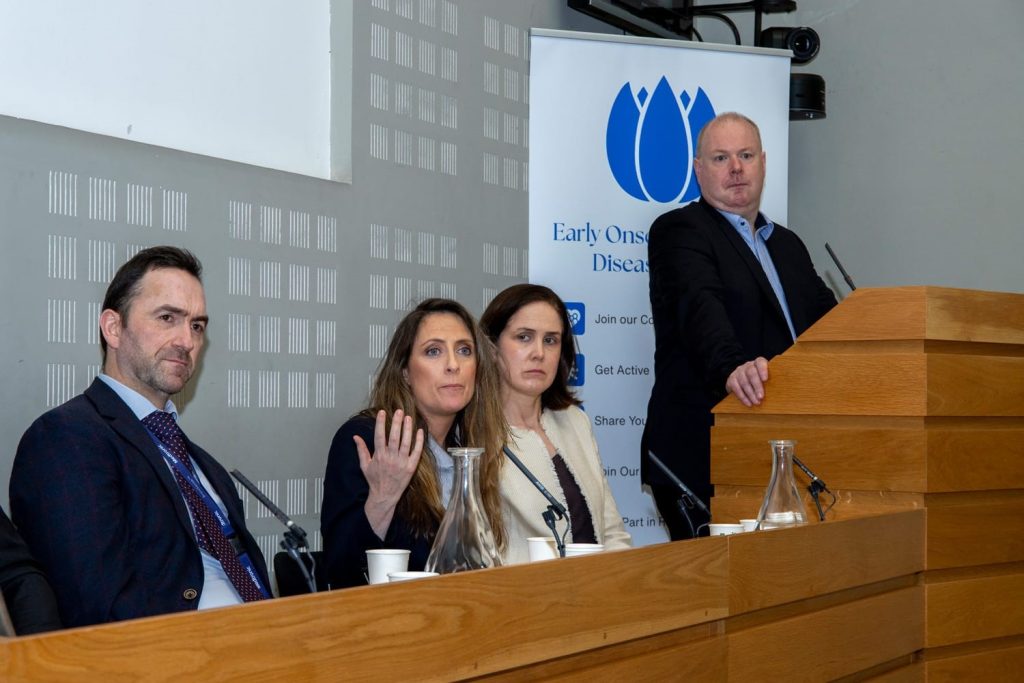
Early Onset Parkinson’s Disease Ireland (EOPD.ie) recently held a policy briefing in the AV Room at Leinster House, kindly facilitated by Paul Murphy. The session brought together clinicians, researchers, policymakers, and members of the Early Onset Parkinson’s community to highlight the urgent gaps in care and the need for immediate, targeted investment.
Clinical Reality: A System Under Strain
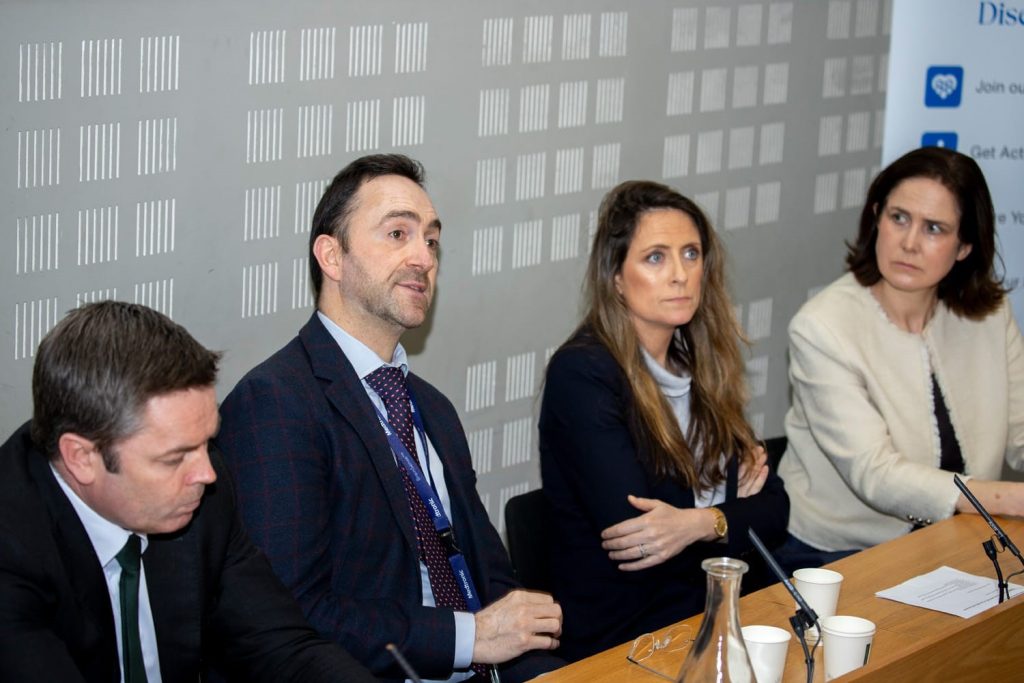
We were joined by leading experts including Professor Richard Walsh, Dr Conor Fearon, Ms Catherine Moran, and Dr Jane Cryan.
Ms Catherine Moran, Ireland’s sole neurosurgeon currently providing Deep Brain Stimulation (DBS), outlined the severe capacity constraints within the system, including a shortage of beds. She described having to call a patient on a Sunday to attend at 5am the next morning when a bed became available — a stark example of clinicians doing everything possible within an overwhelmed system.
The Human Impact of Delays
The lived reality of these systemic issues was powerfully illustrated through patient testimony. Niall O’Connor shared that by the time he receives DBS surgery, he will have waited 23 months. For a progressive neurological condition, this delay can result in irreversible decline.
Professor Richard Walsh further explained that many patients are required to repeat DBS assessments while waiting. As their condition progresses, some deteriorate to the point where they are no longer suitable candidates by the time a surgery date becomes available.
A System Without a Pathway
Dr Conor Fearon also highlighted the absence of a functioning Parkinson’s care pathway in Ireland. While work is underway to develop a Parkinson’s Pathway Programme, further investment is urgently required to deliver a fit-for-purpose, coordinated system of care — something that currently does not exist.
A Clear and Achievable Solution
A key solution discussed was investment in a neurosurgical robot to support DBS surgery. This would allow Ms Catherine Moran to perform up to two procedures per day instead of one, significantly increasing capacity, reducing waiting lists, and improving patient outcomes.
This approach is not only clinically necessary but economically sound. Approximately €2–3 million was spent in 2023 outsourcing DBS surgeries to the UK — funding that leaves the Irish health system entirely, along with valuable expertise. Investing in domestic capacity ensures both better outcomes for patients and more sustainable use of public resources.
The Role of Exercise, Neurorehabilitation and Community Support
EOPD members in attendance presented on their lived experience of Early Onset Parkinson’s, highlighting the critical role of exercise as the only evidence-based, non-pharmacological intervention proven to slow progression. They emphasised that access to structured, condition-specific exercise is not optional — it is a core part of treatment and must be funded accordingly.
EOPD members also shared a statement from Neurological Alliance of Ireland supporting the urgent need for properly resourced, community-based neurorehabilitation teams for people living with long-term neurological conditions. Current models of care do not reflect the lifelong, progressive nature of Parkinson’s, leaving many without the ongoing support they need.
They further outlined the reality of discrimination in the workplace following diagnosis, and the lack of structured supports to enable people to remain in employment for as long as possible.
The importance of access to Public Health Nurses was also highlighted as a vital component of coordinated care — supporting individuals and families to navigate services, access supports, and remain living independently within their communities.
The Role of Research: Ireland’s Brain Bank
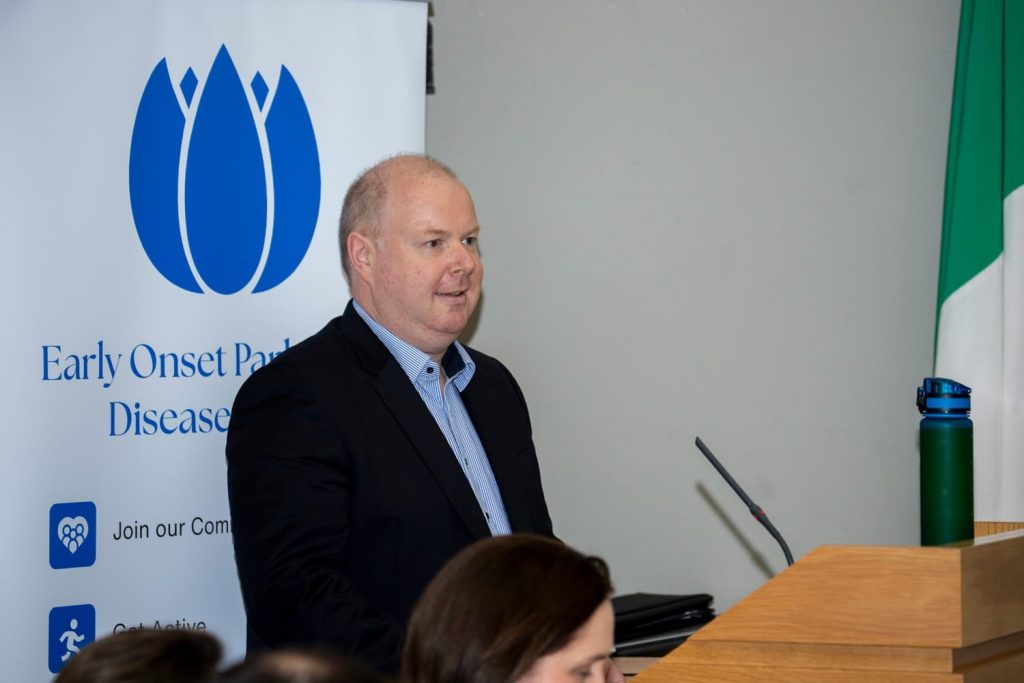
Dr Jane Cryan attended the briefing to outline the importance of a national brain bank in Ireland. She explained how this vital research infrastructure operates, enabling the study of brain tissue to better understand neurological conditions such as Parkinson’s, improve diagnosis, and support the development of more effective treatments.
Investment in brain research infrastructure is essential to advancing knowledge, improving patient outcomes, and ensuring Ireland can contribute meaningfully to international research efforts.
Policy Priorities
EOPD Ireland is calling for the following actions:
- Timely Diagnosis & Neurology Access: Introduce maximum waiting time targets and expand consultant neurologist capacity
- National Parkinson’s Registry & Research Investment: Enable data-driven planning, accountability, and improved outcomes
- Continuous Neuro-Rehabilitation & Care Coordination: Move beyond short-term models to long-term, community-based care
- Access to Public Health Nurses: Ensure consistent access to PHNs to support care coordination and navigation of services
- Exercise as a Funded Core Treatment: Recognise and fund exercise as a first-line therapy
- Access to Advanced Treatments (DBS): Invest in surgical capacity, including a neurosurgical robot, to reduce waiting times
- Prevent Under-65s in Nursing Homes: Ensure appropriate, community-based supports and pathways
Moving Forward
The briefing underscored a clear message: the challenges facing people with Early Onset Parkinson’s in Ireland are significant, but they are not insurmountable. With targeted investment, strategic planning, and political will, meaningful improvements can be achieved.
EOPD Ireland will continue to advocate for the changes needed to ensure timely diagnosis, equitable access to care, and improved quality of life for those living with this condition.