
EOPD Ireland Board Member Lynn McDonald Shares Her Story with the Irish Independent
EOPD Ireland is honoured to share this powerful article featuring our Board Member, Lynn McDonald, published in the Irish Independent.
Lynn’s story shines a light on the realities many people in the Early Onset Parkinson’s community face every day: delayed diagnosis, stigma, financial pressures, barriers to accessing exercise and rehabilitation, and the emotional toll of trying to navigate complex health systems while continuing to care for others.
Her story also reflects incredible resilience, advocacy and strength, and highlights the importance of community and connection for people living with EOPD.
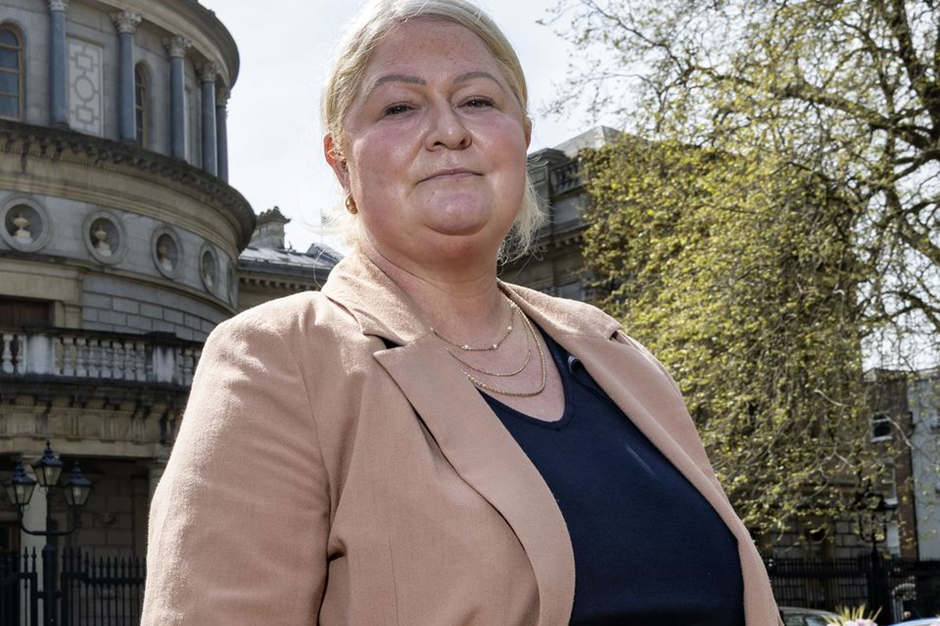
Early-onset Parkinson’s: ‘I felt trapped in a body that didn’t feel like mine anymore’
Dealing with EOPD while caring for her terminally ill daughter, who died two years ago aged just 10, Lynn McDonald (45) describes how the impact of being a carer and the lack of resources available were a barrier to slowing the progress of the disease.
By Liadán Hynes | Mon 4 May 2026
When Lynn McDonald received a diagnosis of early-onset Parkinson’s disease, she was already a carer for her daughter, who died two weeks before her 11th birthday. The symptoms that were eventually diagnosed over a decade later as early-onset Parkinson’s disease (EOPD) began when the 45-year-old was just 32.
“My initial symptoms were quite vague,” she says. “Numerous things. I just knew I wasn’t right. When I say exhaustion…in your first trimester of pregnancy, you feel a slump. If you quadruple that, that’s just barely touching it.” Insomnia was an issue, as were fainting spells and bowel issues.
She adds: “Constipation, diarrhoea, nothing in between. Apathy was something I struggled with right the way through until I’d been put on the right combination of medication. It leaves you with a sense of not finding joy in anything, not feeling adequate or good enough. So (you are) constantly trying to push yourself, and do bigger and better, all the while dealing with the physical symptoms which led to periods of inability to function.”
Lynn was examined for cardiac issues “because there was a death in the family”; rheumatology, “because in the mornings my joints felt like an 80-year-old lady”. But these tests revealed nothing and her symptoms were repeatedly ascribed to the tiredness she experienced as a carer.
Lynn’s middle child, daughter Daisy, was born with Rett syndrome, a rare genetic neurological and developmental disorder that primarily affects females. Her mother, a single parent, was both her carer and advocate.
Lynn was eventually diagnosed with EOPD when Daisy – who died two weeks before her 11th birthday – was just eight years old.
There are approximately 18,000 people living in Ireland with Parkinson’s, which is mostly diagnosed in people over the age of 60. The exact cause is not known, but scientists believe it results from a combination of genetic and environmental factors. Genetic factors play a larger role in EOPD.
People with EOPD generally have slower disease progression. Other problems associated with Parkinson’s, such as memory loss, confusion, and problems with balance, tend to occur less often in people with early-onset Parkinson’s, but the disease severity and symptoms vary from person to person.
Patients will respond to physical and occupational therapy, speech therapy, and exercise to alleviate motor symptoms. It was when Lynn developed a tremor in her right side that happened, as she says, “literally overnight, the right side of my body just didn’t function”, and she was hospitalised again and she finally received a diagnosis.
She adds: “I was also having difficulty with swallow at that stage too, choking a lot, which brought on chest infections, aspiration pneumonia.” When scans finally provided a diagnosis, her doctors told her “this isn’t a worst-case scenario. You could have a long life. There is medication there. We can manage symptoms if we work together, but it’s going to be difficult to get the right combinations”.
Getting the diagnosis was initially a relief, she says: “Because I felt somebody had acknowledged my symptoms. Somebody was taking me out of the carer role, and seeing me as an individual who is struggling physically and mentally. And after the relief came the big black cloud. I still had to go home. I still had the role of looking after a very, very sick little girl who was going to leave. I had to put my diagnosis to the side because if I allowed it to fully consume me, I wouldn’t be able to continue doing what I was doing for Daisy. That was the hardest part.”
“I left the clinic and I felt numb initially. When I came through the door, the enormity of everything really hit home, and fear came with that. Will I get to see my children grow? Will I end up with dementia in 10 years’ time? Will I end up in a nursing home under 65 like so many others? Who do I ask for support? There’s no guidebook that’s given to you because there’s no actual proper interventional system in place,” she says.
Raising three children as a single parent, one of whom required 24-hour care, meant Lynn’s own needs were pushed “right to the back.”
“Because I was a carer, actually accessing the opportunity to go and exercise and not knowing the importance of exercise as medicine within Parkinson’s was something that was detrimental and that I can’t reverse.”
A new independent report from the Neurological Alliance of Ireland (NAI), carried out by Leading Edge and supported by Sanofi, highlighted critical gaps in neurology services across Ireland, with over 860,000 people living with a neurological condition and facing increasing barriers to timely diagnosis, treatment and ongoing care.
Lack of resources meant Lynn has been unable to access the adjunct care she needs to manage her own diagnosis.
“I should have been in a really strict, regimental, high-intensity workout scheme day in, day out. That’s the only thing that slows the progression, and in some cases can stop the degeneration altogether. It’s a financial burden again. Poverty becomes a barrier to accessing the right intervention.”
Stress can exacerbate the symptoms of Parkinson’s.
“It totally does and that’s why I’m so invested in mindfulness now. The self-care is a huge, huge part. Being able to keep your stress levels at all times reduced is vital when symptoms present.”
She describes the physical strain of caring responsibilities while living with Parkinson’s:
“It got to a stage where bending down to tie a lace became difficult. I was so stiff… I felt trapped in a body that didn’t feel like mine anymore.”
Lynn, who is now a community advisor with the European Federation of Neurological Alliances, says that advocating for her daughter’s needs taught her “how to stand up and say, this is not acceptable and I, and we, deserve better.”
Before becoming a carer, Lynn was an actress, and then a chef. Neither line of work is an option for her now.
“The stigma associated with it, when you say Parkinson’s, people just automatically imagine an old stooped-over gentleman with a walking stick. But with early-onset Parkinson’s, you are diagnosed in the prime of your life. You have family, you have a home, you have financial responsibilities. And the minute that diagnosis comes, your future starts to slip away.”
Lynn also speaks about the cost of disability and the financial realities facing many people living with chronic illness.
“It’s a change in the system that needs to be implemented. It’s discussing it and not being afraid to say, this is the cost of disability. It traps individuals like myself in a constant cycle of poverty.”
Following the loss of Daisy, Lynn describes a long period of grief and rebuilding her identity while continuing to manage Parkinson’s symptoms and care for her young son Henry.
Her advocacy work through EOPD Ireland has become a source of connection and hope.
“My mental well-being is a hundred times better than it was at the start of my symptoms. I’m a different person in comparison… I log on and see the work that EOPD Ireland are doing and I just feel so grateful to be part of it. I’m not alone anymore.”
“When you get your diagnosis, you find your tribe – and I found mine with EOPD Ireland.”
“We have people coming to us who are being discharged from hospitals and there are no services in the community. But when they find us, we’re there and we don’t turn our back on anybody. It’s absolutely huge knowing I can help somebody.”
We are deeply grateful to Lynn for sharing her experience so openly and courageously, and for continuing to advocate for people living with Early Onset Parkinson’s Disease in Ireland.